

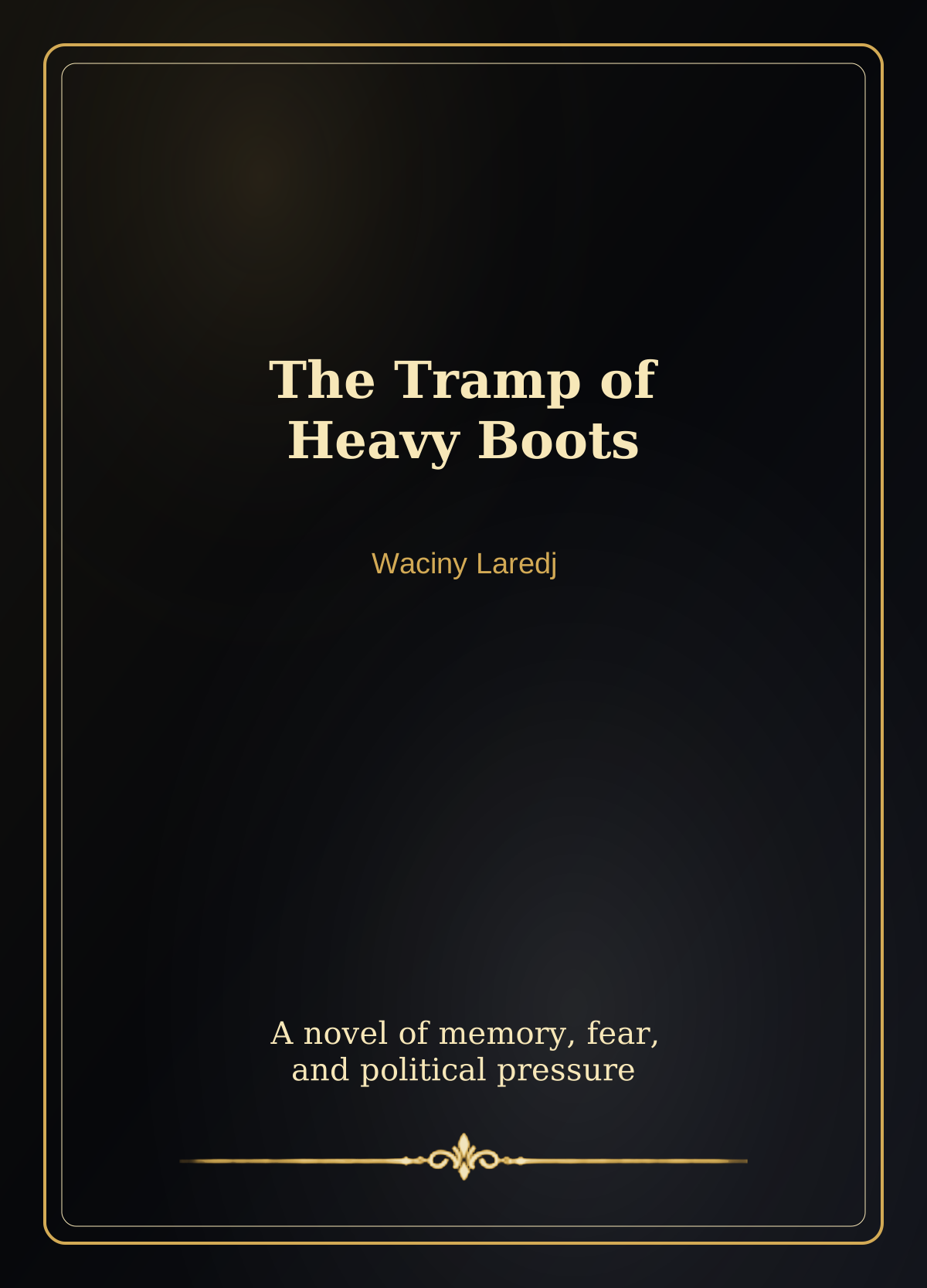
The Tramp of Heavy Boots Novel
The Tramp of Heavy Boots by Waciny Laredj is an Algerian literary novel known for its early controversy and tense atmosphere. It reflects on political pressure, youth, fear, memory, and the difficult relation between personal experience and public history in a society marked by suspicion and authority.
Summary of The Tramp of Heavy Boots Novel
The Tramp of Heavy Boots is a compact but tense novel shaped by the sound suggested in its title. The heavy boots become more than a physical image; they suggest pressure, surveillance, authority, and the feeling that private life is being crossed by forces larger than the individual.
Waciny Laredj writes from a world where youth and thought meet political anxiety. The novel carries the atmosphere of a generation trying to understand itself under the weight of public fear and broken collective dreams. Its power comes from the way it turns unease into a literary rhythm.
This novel suits readers interested in Algerian literature, politically charged fiction, and short intense novels of memory and pressure. Its strength lies in its ability to make an echo feel like a whole social condition: every step in the distance becomes a reminder of power, vulnerability, and the cost of speaking.
Characters in The Tramp of Heavy Boots Novel
The young narrator: A reflective figure whose memories and fears reveal the pressure of a troubled political atmosphere.
The heavy boots: A symbolic presence representing authority, threat, surveillance, and the harsh rhythm of power.
The student generation: A group shaped by ambition, anxiety, and the collapse of public dreams.
The city: A tense social space where ordinary movement becomes charged with suspicion and memory.
The hidden autobiographical echo: A symbolic layer where personal experience and public history seem to overlap.