

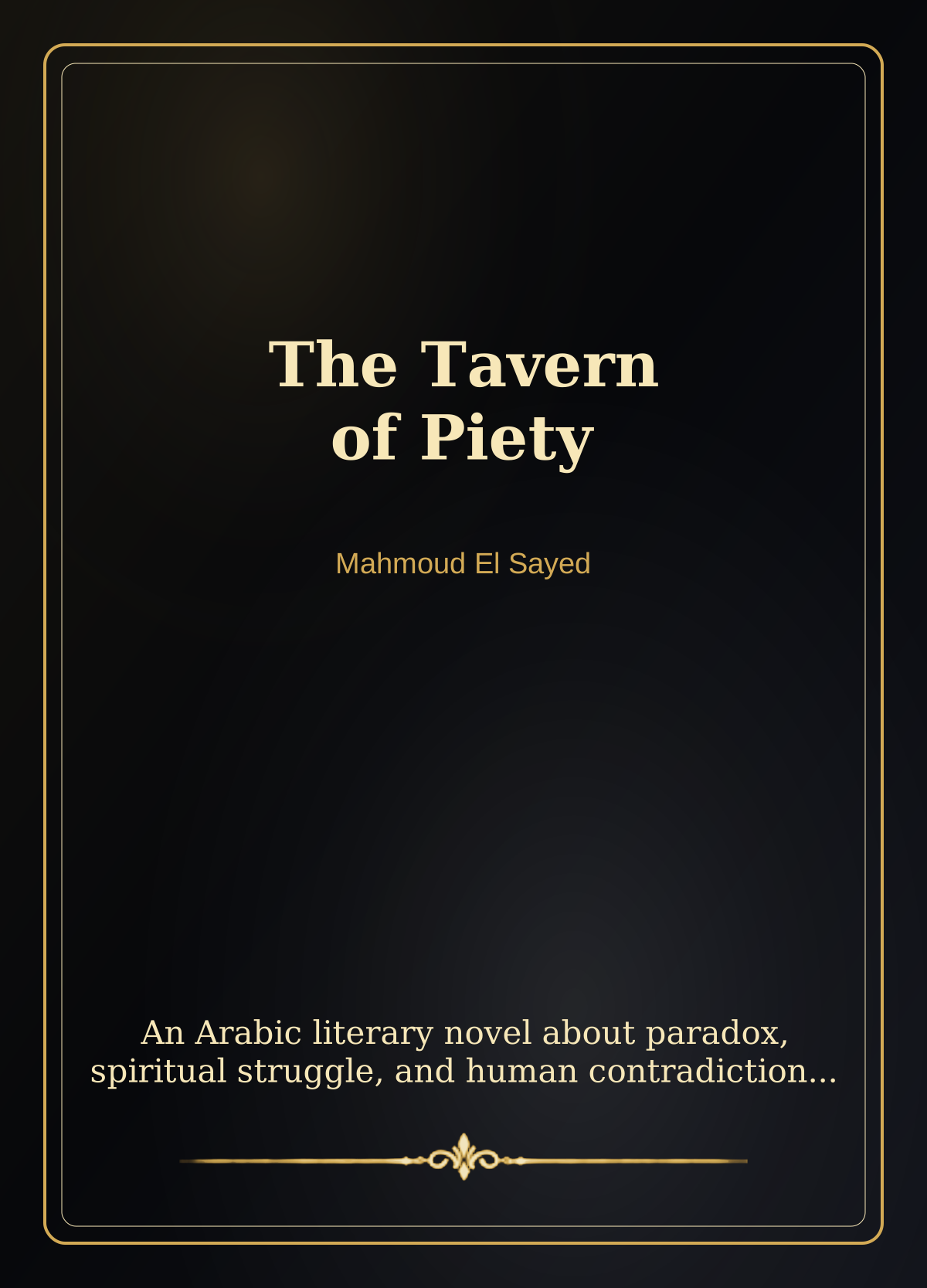
The Tavern of Piety Novel
The Tavern of Piety by Mahmoud El Sayed is presented here as an Arabic literary novel with a striking paradox at its center. The title combines a tavern, a place associated with excess or escape, with piety, a word tied to devotion and restraint. This tension suggests a story about contradiction inside the self and society, where spirituality, weakness, longing, and moral conflict meet in one space.
Summary of The Tavern of Piety Novel
The appeal of the novel lies in its paradoxical title. It suggests a world where moral certainty is tested and where people may carry both devotion and failure within themselves. This gives the story psychological and symbolic richness, encouraging the reader to explore human complexity rather than simple judgment.
A major strength of the story is its ability to transform inner struggle into literary drama. The novel can examine guilt, hypocrisy, longing, repentance, and self deception through characters who move between idealism and desire. This tension creates an intense emotional atmosphere and opens the door to moral reflection.
The Tavern of Piety is a strong choice for readers who enjoy Arabic literary fiction with symbolic depth and emotional conflict. Its appeal lies in the way it explores the uneasy border between virtue and weakness, showing that the human soul is rarely simple or pure.
Characters in The Tavern of Piety Novel
The conflicted seeker: A central figure torn between spiritual aspiration and worldly desire.
The voice of conscience: An inner presence that judges, warns, and demands honesty.
The tempting world: A surrounding force of attraction, escape, and moral ambiguity.
The pious mask: A symbolic layer that questions sincerity, hypocrisy, and public virtue.
The possibility of repentance: A quiet force suggesting that even contradiction can lead to awakening.