

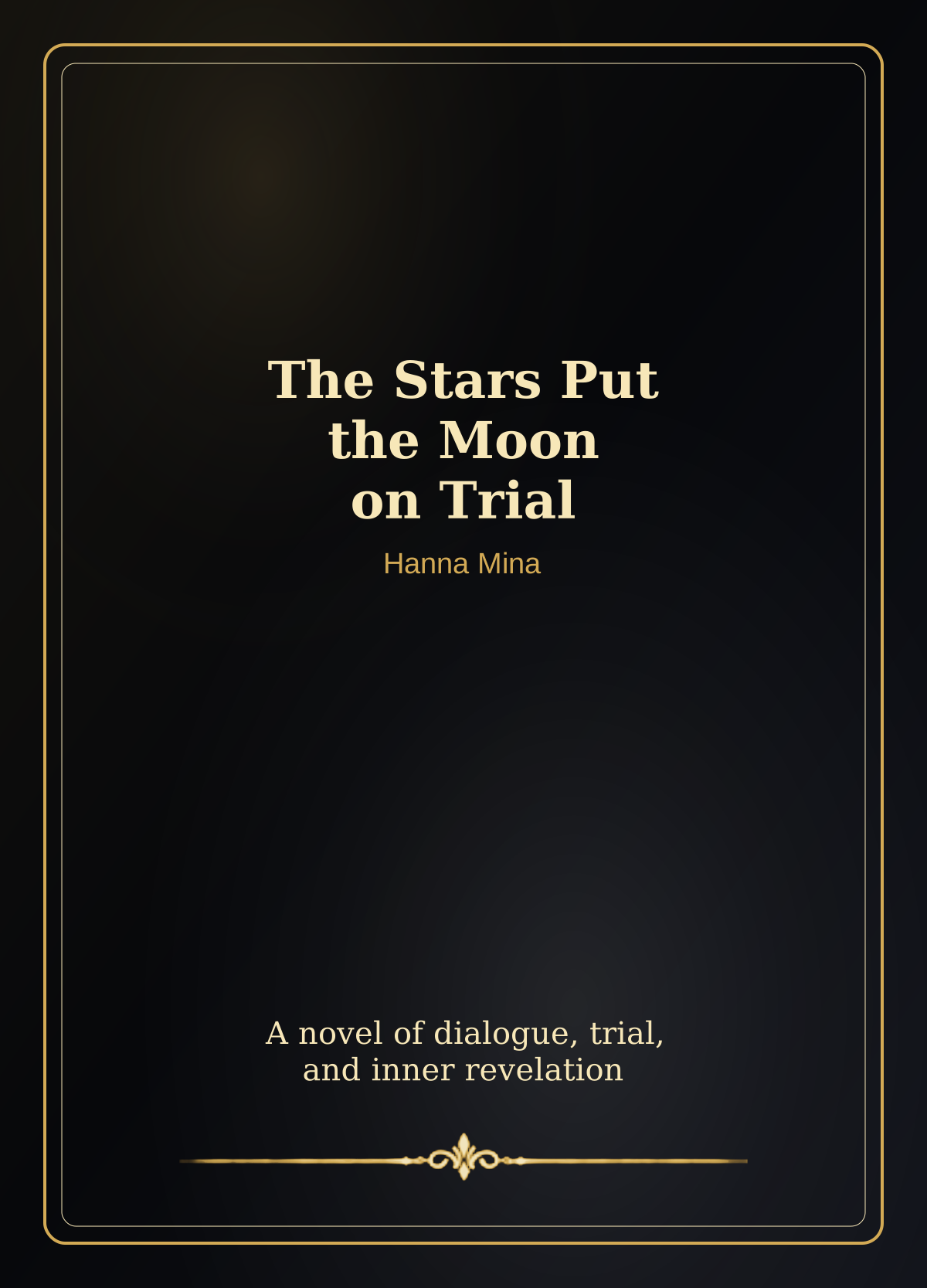
The Stars Put the Moon on Trial Novel
The Stars Put the Moon on Trial by Hanna Mina is an experimental Arabic novel that blends narrative with theatrical dialogue. The work opens a wide space for characters to reveal their hidden selves, turning conversation into a form of trial, confession, and moral exposure.
Summary of The Stars Put the Moon on Trial Novel
The Stars Put the Moon on Trial stands apart in Hanna Mina’s work because it experiments with form as much as with theme. The novel reduces ordinary narration and allows dialogue to carry the weight of conflict, memory, and revelation. In this way, the reader feels close to a dramatic stage where every voice must answer for itself.
The title gives the book a symbolic atmosphere. Stars, moon, trial, and accusation suggest that the novel is less interested in simple events than in moral questioning and inner exposure. Characters speak as if they are defending their choices, revealing private wounds, and confronting truths that have been kept in darkness.
This novel suits readers who enjoy serious Arabic literature, experimental structure, and dialogue-driven fiction. Its value lies in the way Hanna Mina uses conversation to uncover the hidden life of the self, creating a work that can be read both as a novel and as a dramatic confrontation.
Characters in The Stars Put the Moon on Trial Novel
The moon: A symbolic presence that represents the accused center around which judgment, memory, and emotional conflict gather.
The stars: A collective symbolic voice that questions, observes, and presses the hidden truth into the open.
The speaking characters: Figures who reveal their inner lives through dialogue rather than conventional narration.
The judge-like voice: A moral presence that turns conversation into a form of trial and self-examination.
The hidden self: The deepest character in the novel, exposed through confession, defense, hesitation, and contradiction.