

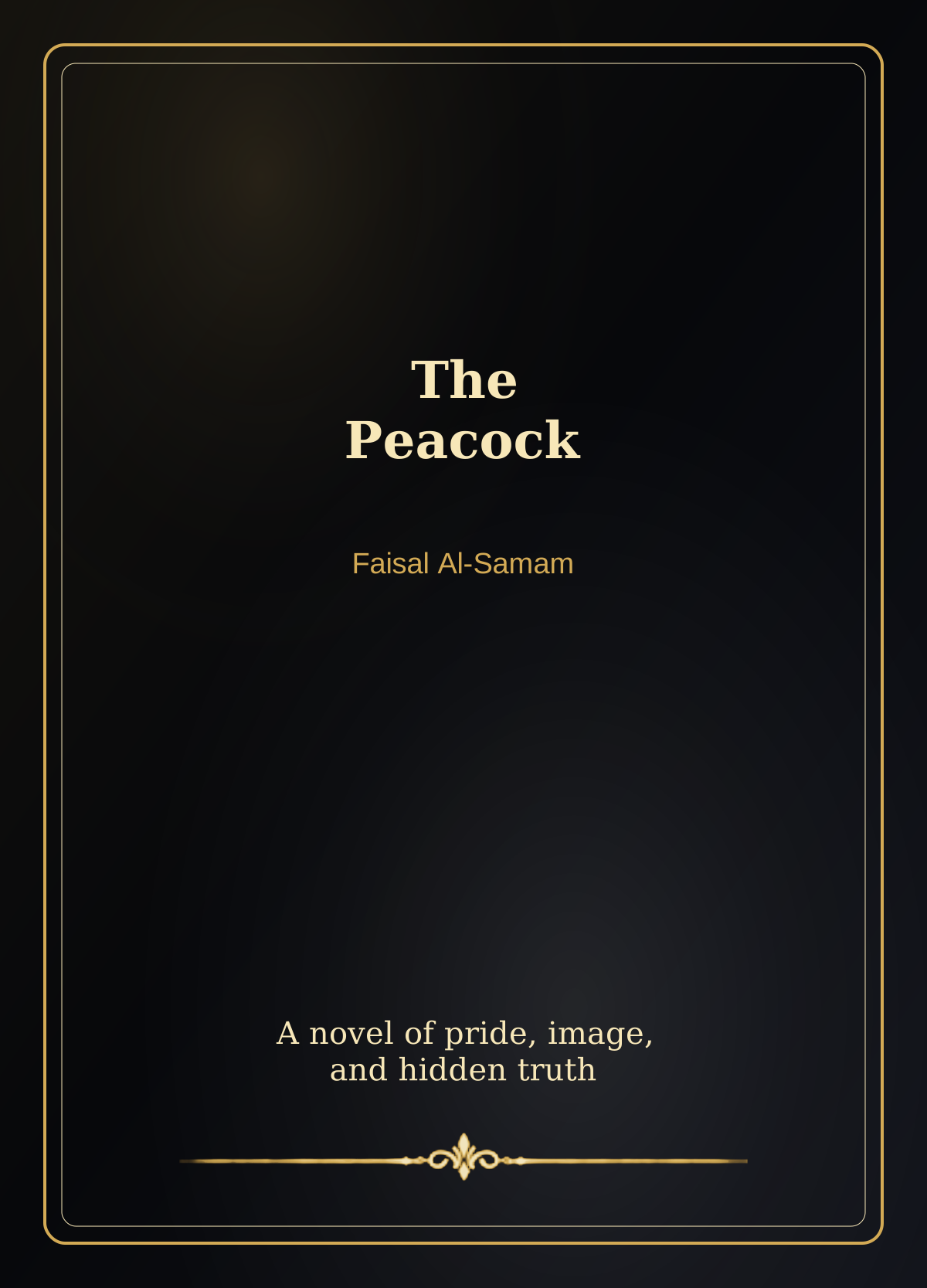
The Peacock Novel
The Peacock by Faisal Al-Samam is presented here as an Arabic literary novel centered on image, pride, and the fragile self hidden behind social display. Using the peacock as a rich symbol of beauty, vanity, and exposure, the novel invites reflection on identity, reputation, and the masks people wear before others.
Summary of The Peacock Novel
The Peacock uses a symbolic title that immediately suggests beauty, pride, and the desire to be seen. The novel can be read as a social and psychological reflection on people who build their lives around appearance while hiding fear, emptiness, or wounds beneath the surface. The peacock becomes a mirror for a world fascinated by display.
The emotional tension comes from the gap between the outer image and the inner truth. Characters seek admiration, status, or control, yet the more they perform strength, the more their hidden vulnerability begins to appear. The story’s value lies in showing how vanity can be a shield as much as a flaw.
This novel suits readers who enjoy Arabic literary fiction with symbolic meaning and social observation. Its strongest idea is that the brightest feathers may hide the deepest uncertainty, and that real dignity begins when a person stops living only for the eyes of others.
Characters in The Peacock Novel
The peacock-like figure: The central symbolic character whose pride and display reveal hidden fragility.
The observer: A reflective presence that notices the gap between public image and private truth.
The admirer: A character drawn to beauty and status, helping expose the power of appearances.
The rival: A figure whose presence intensifies comparison, envy, and the struggle for recognition.
The hidden self: A symbolic inner character representing fear, insecurity, and the truth behind the mask.