

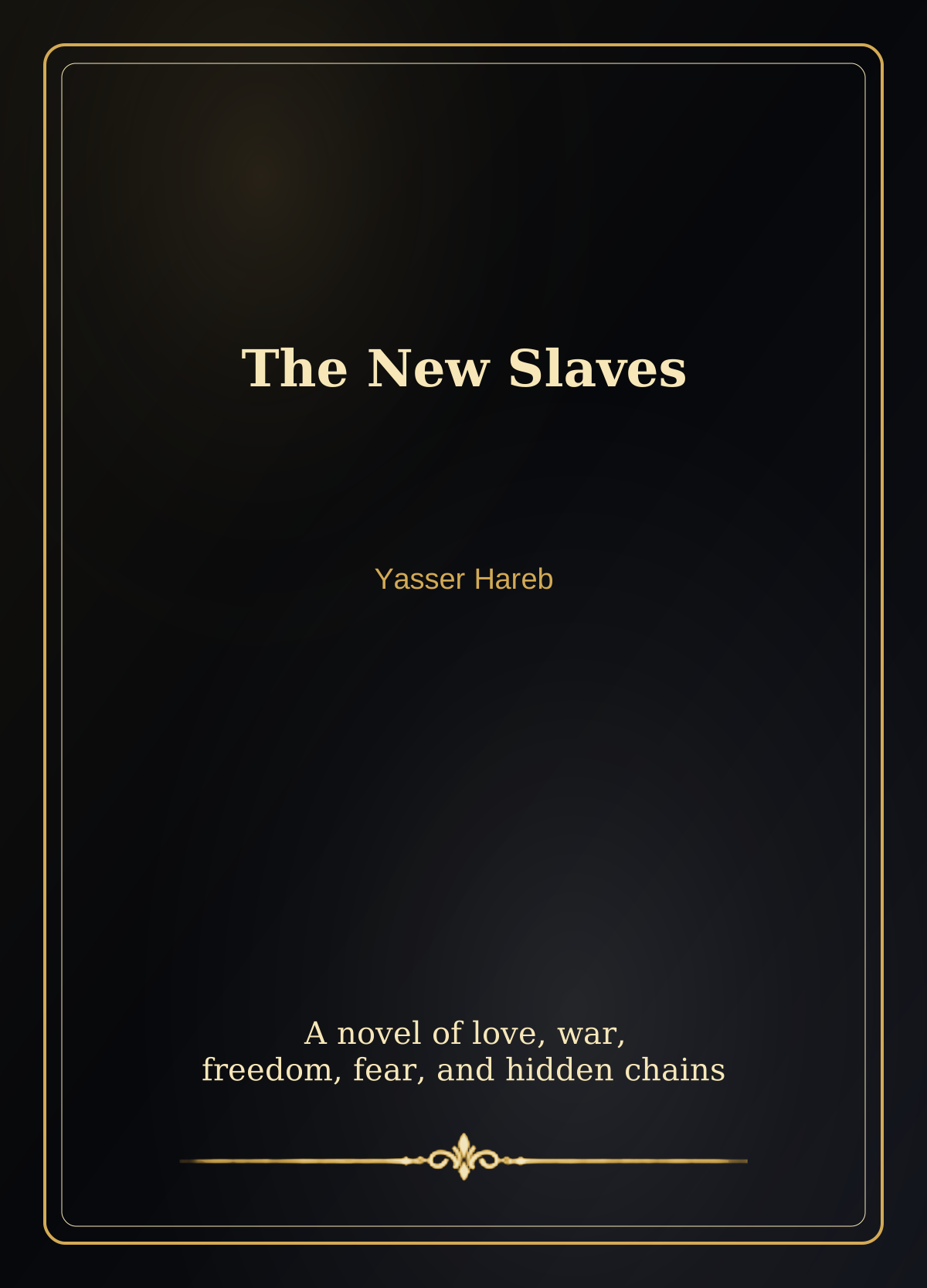
The New Slaves Novel
The New Slaves by Yasser Hareb is an Arabic novel that places love, war, and social collapse in one tense narrative field. Through personal longing and public ruin, the novel explores how people can become captives of fear, power, inherited conflict, and emotional illusion even when they believe they are free.
Summary of The New Slaves Novel
The New Slaves is built around the meeting of intimate emotion and the violence of a damaged public world. The novel presents love not as an isolated private escape, but as a feeling constantly tested by conflict, social pressure, and the breakdown of human trust. Its title suggests that modern slavery may not always appear as chains, but as fear, blind obedience, inherited hatred, and the loss of the ability to choose freely.
The narrative gains strength from the contrast between young hearts searching for connection and a larger world pulled toward ruin. War and destruction do not remain distant background events. They enter the inner lives of the characters, shaping choices, loyalties, and the meaning of hope. This gives the novel both emotional tension and social weight, making it a story about people and about the age that wounds them.
Readers who enjoy Arabic novels with romance, political tension, and social reflection will find this work engaging. It combines accessible storytelling with ideas about freedom, dignity, and the many invisible forces that enslave the human spirit. Its value lies in how it turns a personal story into a wider question: what does freedom mean when fear, power, and desire all compete for the heart?
Characters in The New Slaves Novel
Adham: A young man whose emotional choices are tested by class tension, unrest, and the struggle to remain human in a wounded society.
Aya: A young woman connected to the central love story, representing hope, distance, and the painful divisions created by social reality.
The surrounding society: A powerful collective presence that presses on the characters through war, fear, expectations, and inherited conflict.