

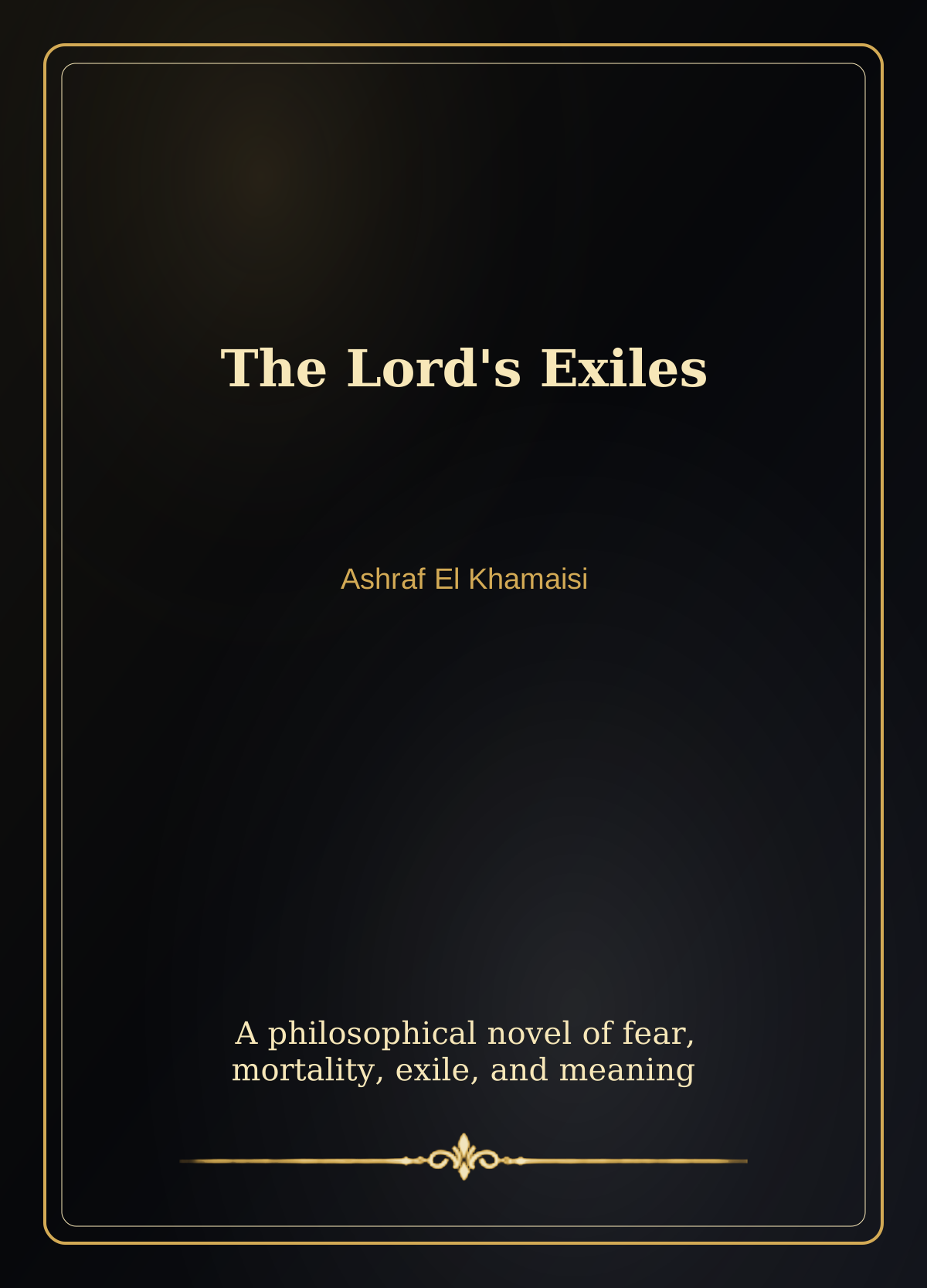
The Lord's Exiles Novel
The Lord's Exiles by Ashraf El Khamaisi is a philosophical literary novel that follows Hagizi, a man shaken by a dream and by his fear of death and disappearance. Through anxiety, memory, and existential questioning, the novel explores how human beings face mortality, loneliness, and the need to give life meaning.
Summary of The Lord's Exiles Novel
The Lord's Exiles begins from a disturbing inner crisis. Hagizi is unsettled by a vision that turns death from an abstract idea into an urgent personal fear. This fear does not only concern the end of life, but also disappearance, abandonment, and the possibility that a person may pass through the world without finding lasting meaning.
Ashraf El Khamaisi builds the novel around existential tension. The characters move through fear, desire, belief, uncertainty, and the heavy pressure of time. The novel uses the idea of exile not only as physical distance, but as a spiritual and emotional condition. A person can feel exiled inside his own life when he loses trust in meaning, love, or future peace.
The novel is suitable for readers who enjoy serious Arabic fiction with philosophical depth. It does not offer a simple adventure; instead, it creates a reflective experience about mortality and the human wish for continuation. Its power comes from turning fear into a question about how life should be lived before it ends.
Characters in The Lord's Exiles Novel
Hagizi: The central character, whose fear of death and disappearance drives the novel’s philosophical movement.
The monk in the vision: A symbolic figure who awakens Hagizi’s crisis and turns time into a pressing question.
The voices of fear: Inner and outer pressures that make the hero confront mortality, loneliness, and uncertainty.
The figures of exile: Characters and images that represent distance from peace, belonging, and stable meaning.
Life itself: A symbolic force in the novel, standing against despair and inviting the characters to search for purpose.