
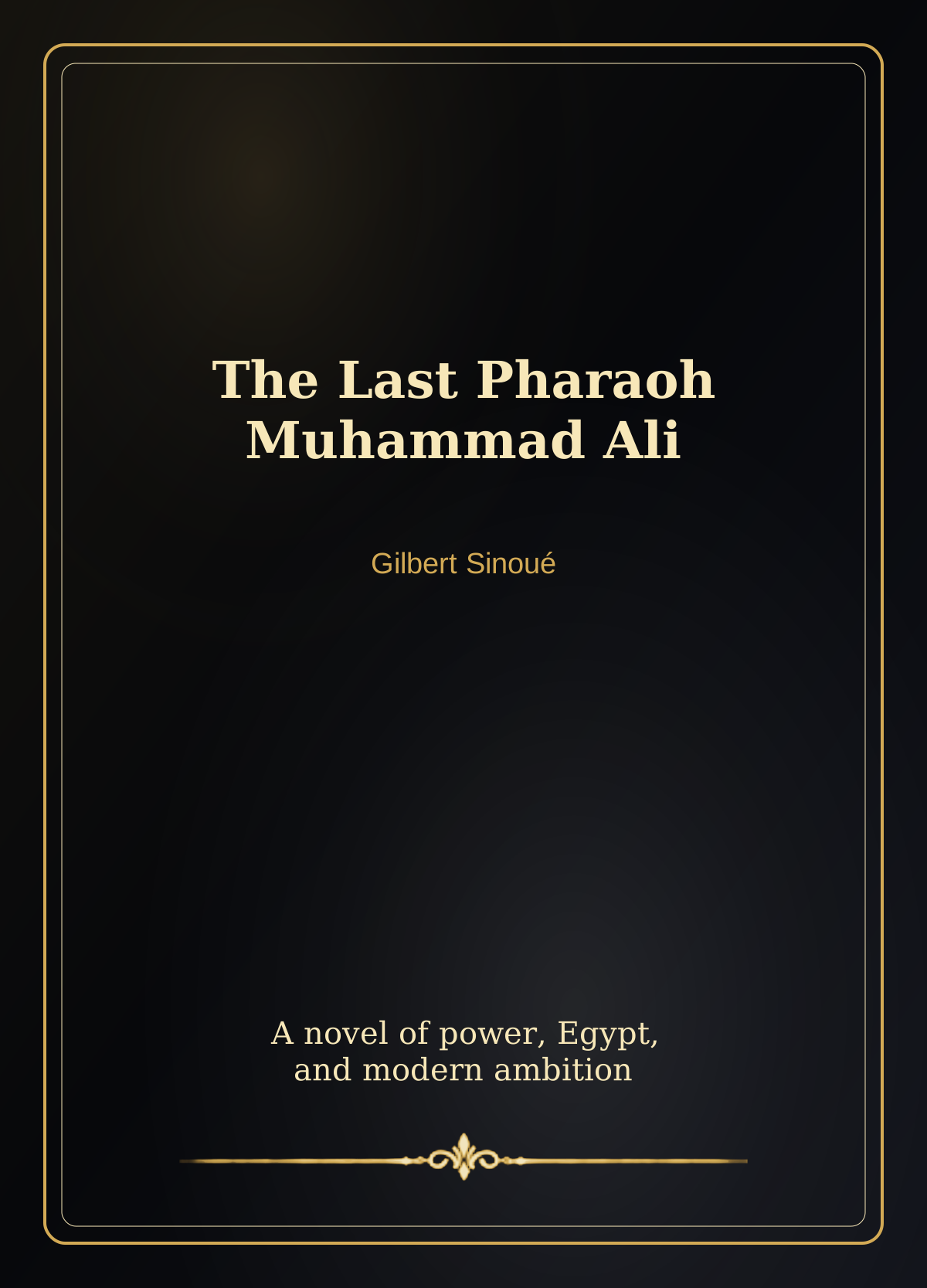
The Last Pharaoh: Muhammad Ali Novel
The Last Pharaoh: Muhammad Ali by Gilbert Sinoué is a historical biographical novel about Muhammad Ali Pasha and the turbulent rise of modern Egypt. Through politics, family, reform, military ambition, and regional conflict, the novel presents the ruler as a complex figure whose dream of power reshaped Egypt and the surrounding world.
Summary of The Last Pharaoh: Muhammad Ali Novel
The Last Pharaoh: Muhammad Ali follows the life and rise of Muhammad Ali Pasha, the ambitious ruler often associated with the making of modern Egypt. Gilbert Sinoué writes history through a novelistic lens, turning political events, family tensions, reforms, and battles into a story of power and destiny.
The novel presents Muhammad Ali as neither a simple hero nor a simple tyrant. His project carries energy, modernization, and vision, but also violence, calculation, and personal cost. Around him, advisers, family members, soldiers, rivals, and foreign powers all shape a world where every decision has consequences beyond the palace.
This novel suits readers who enjoy historical fiction, political biography, and stories about rulers who change the map around them. Its strength lies in making history feel dramatic and human, showing that the building of a state is also a story of ambition, loss, compromise, and memory.
Characters in The Last Pharaoh: Muhammad Ali Novel
Muhammad Ali Pasha: The ambitious ruler whose reforms, military dreams, and political calculations drive the novel.
Ibrahim Pasha: The powerful son and military figure whose campaigns and loyalty shape Muhammad Ali’s project.
The Egyptian court: A world of advisers, family tensions, ambition, fear, and strategic decisions.
Foreign powers: A surrounding pressure of empires and interests that limits and challenges Muhammad Ali’s ambitions.
Egypt: A symbolic living presence transformed by reform, war, labor, and the dream of becoming a modern state.