

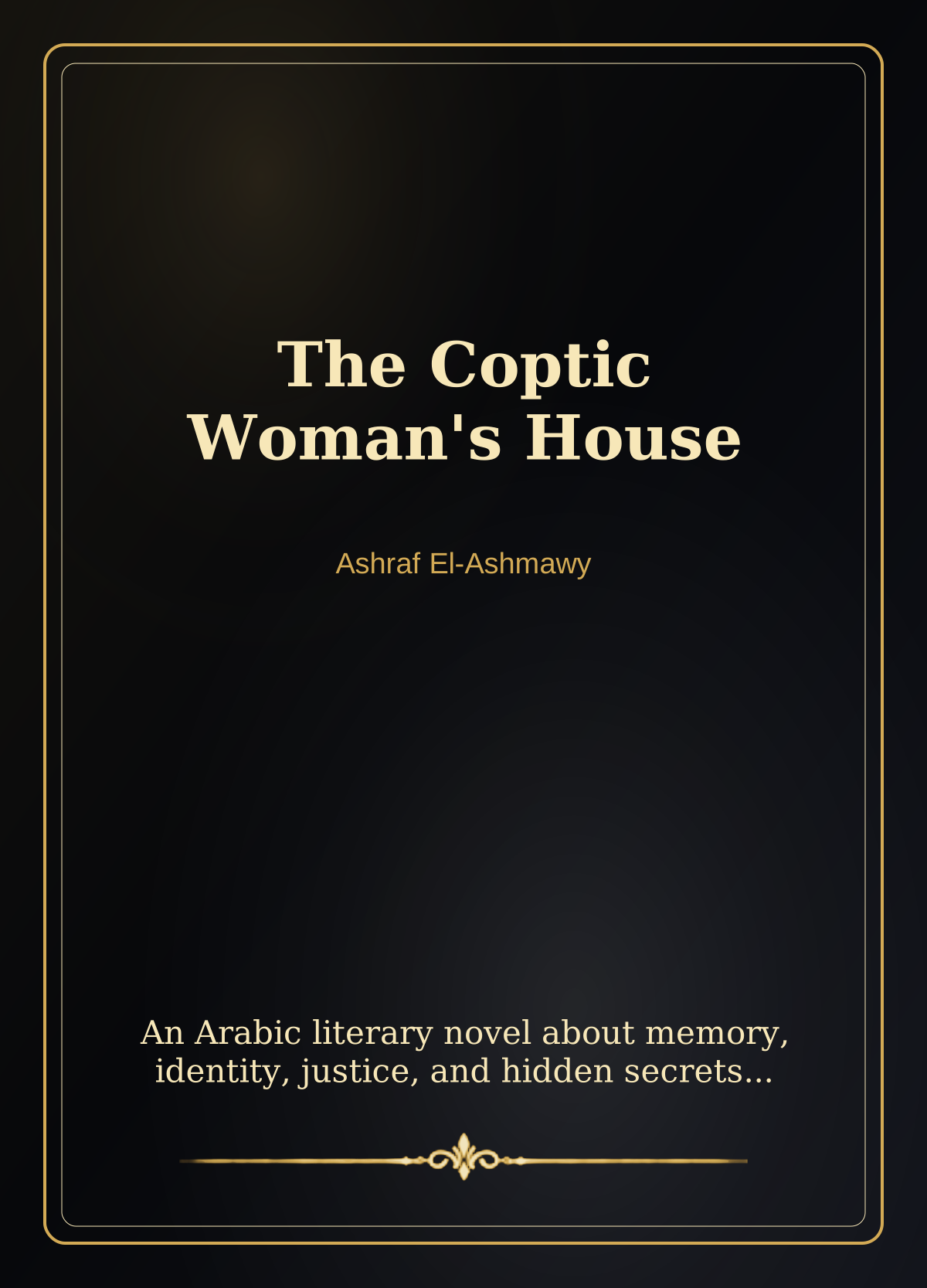
The Coptic Woman's House Novel
The Coptic Woman's House by Ashraf El-Ashmawy is an Arabic literary novel that explores social memory, religious identity, justice, and the secrets hidden inside place. The house in the title becomes more than a setting; it is a space where personal stories, public history, and social tension meet. Through this atmosphere, the novel opens questions about belonging, prejudice, truth, and the fragile relationship between people and the past.
Summary of The Coptic Woman's House Novel
The strength of the novel lies in its use of place as memory. A house can preserve what people try to hide: old wounds, family stories, social suspicion, and the traces of injustice. This gives the narrative depth because the reader is not only following events, but also entering a space heavy with meaning.
A major appeal of the story is its social and moral complexity. Ashraf El-Ashmawy often writes with attention to law, history, and human contradiction, and this kind of novel allows those interests to appear through character, setting, and conflict. The result is a story that asks readers to think about truth beyond appearances.
The Coptic Woman's House is a strong choice for readers who enjoy Arabic literary fiction with social depth and historical atmosphere. Its appeal lies in the way it turns a house into a witness, allowing personal drama and collective memory to meet in a story about identity, justice, and hidden truth.
Characters in The Coptic Woman's House Novel
The Coptic woman: A central presence connected to the house, memory, identity, and the emotional mystery of the story.
The investigating outsider: A figure who enters the world of the house and begins to uncover hidden social and personal truths.
The house: A symbolic character carrying secrets, silence, history, and the weight of past lives.
The local community: A social force shaped by suspicion, tradition, prejudice, and incomplete memory.
The voice of justice: A moral presence pushing the story toward truth, recognition, and difficult questions.