
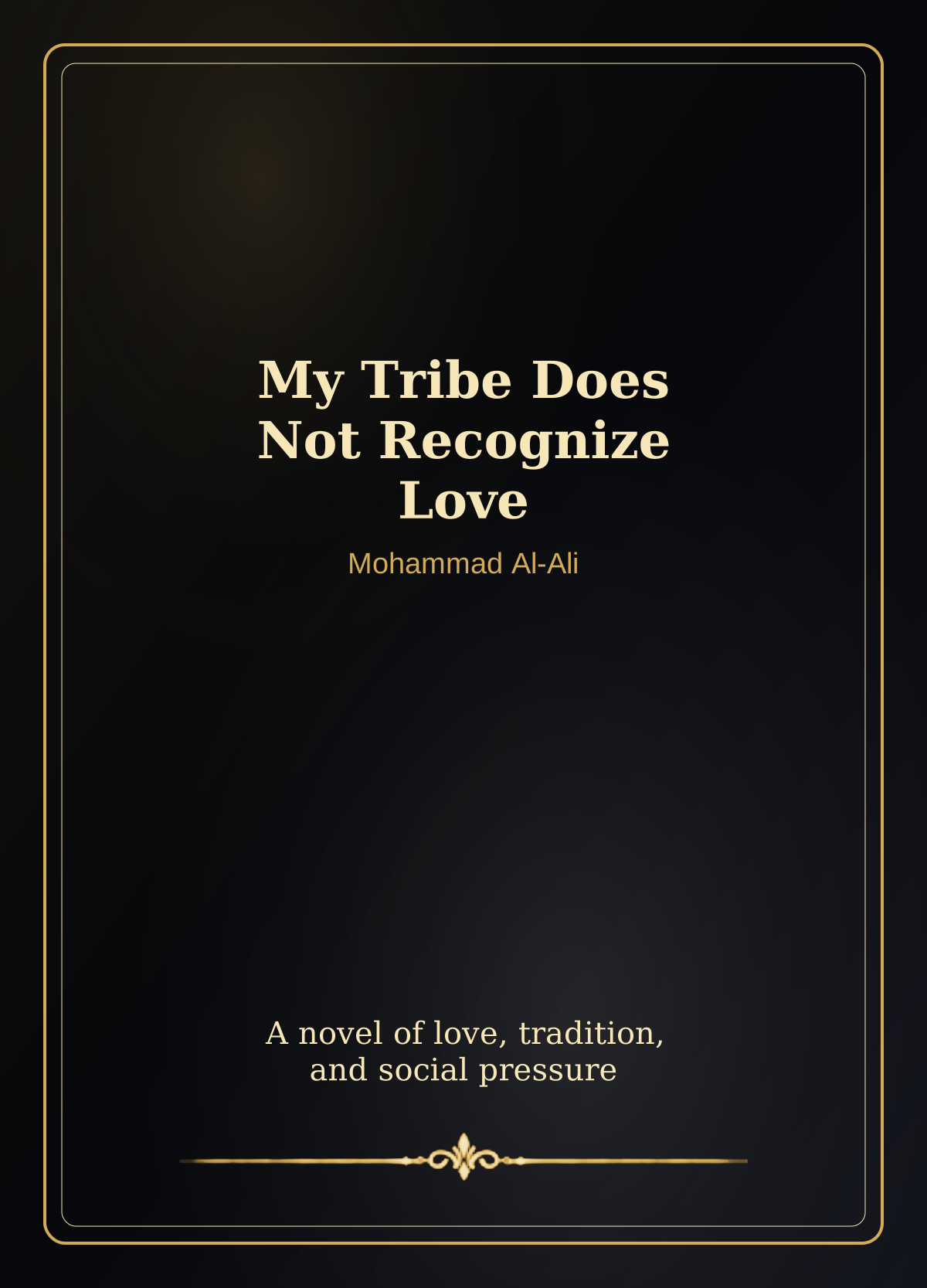
My Tribe Does Not Recognize Love Novel
My Tribe Does Not Recognize Love by Mohammad Al-Ali is an Arabic romantic social novel about love under the pressure of tribe, tradition, and social judgment. Through emotional conflict and questions of belonging, it explores what happens when personal feeling clashes with inherited expectations.
Summary of My Tribe Does Not Recognize Love Novel
My Tribe Does Not Recognize Love begins from a painful conflict between the heart and the social world that surrounds it. Love is not presented as a simple private feeling, but as a choice that can be judged, resisted, or rejected when it challenges the rules of tribe and tradition.
The novel follows emotional tension between longing and fear, loyalty and freedom, personal desire and collective expectation. Mohammad Al-Ali uses romance to examine a larger social question: how much of a person’s life belongs to the self, and how much is claimed by the name, family, tribe, and inherited image?
This novel suits readers who enjoy Arabic romantic fiction with social pressure and moral conflict. Its strength lies in showing that love can become a test of courage when society refuses to recognize it, and that the most difficult battles are sometimes fought quietly inside the heart.
Characters in My Tribe Does Not Recognize Love Novel
The lover: The central romantic figure whose heart challenges the boundaries set by tribe and tradition.
The beloved: The emotional counterpart whose presence turns love into a difficult choice rather than an easy dream.
The tribe: A collective symbolic force representing inherited rules, social pressure, and public judgment.
The family voice: A pressure-filled presence tied to loyalty, reputation, fear, and belonging.
The forbidden love: A symbolic force that tests courage, identity, and the right to choose one’s own life.