

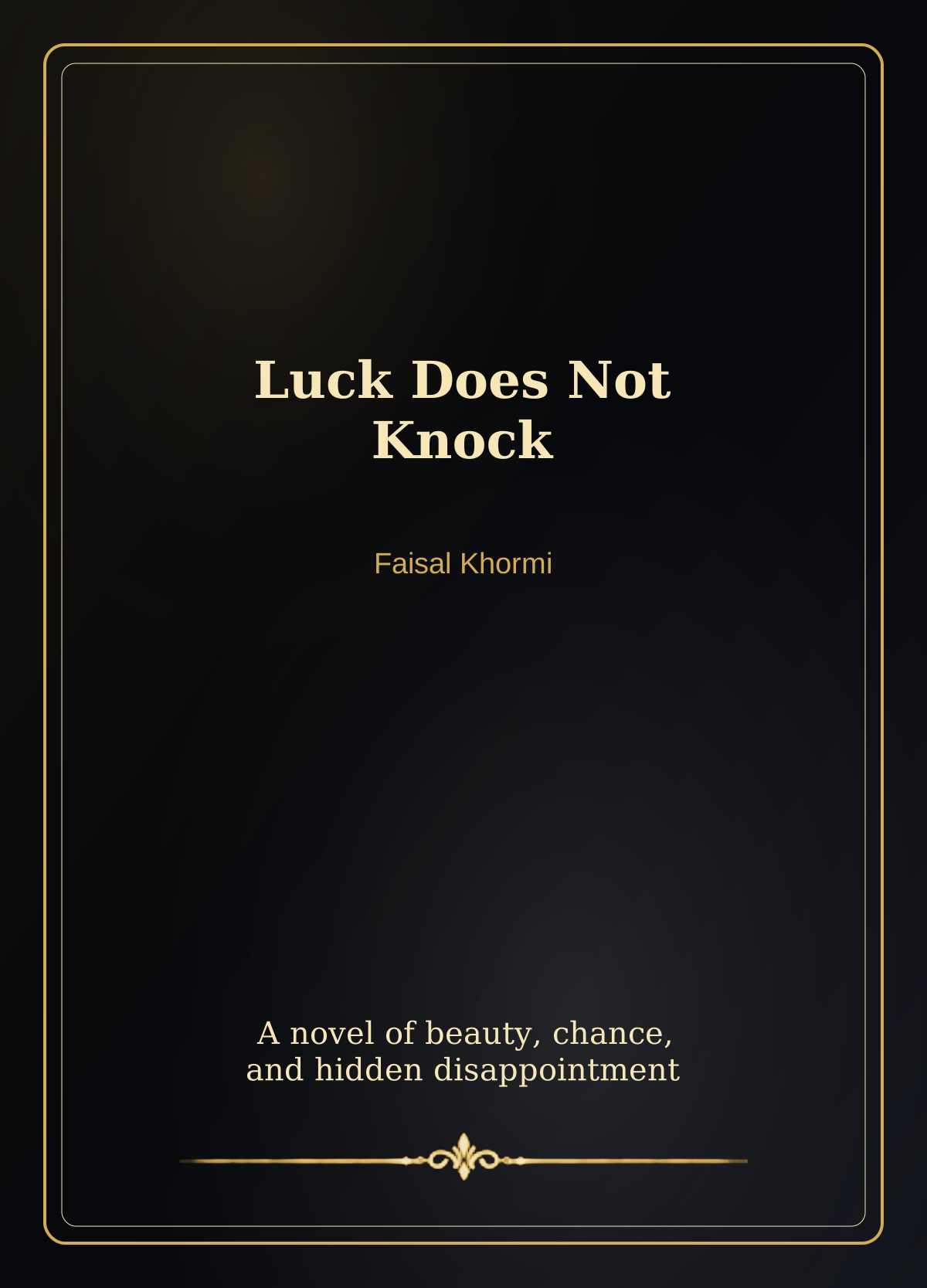
Luck Does Not Knock on the Doors of Beautiful Women Novel
Luck Does Not Knock on the Doors of Beautiful Women by Faisal Khormi is an Arabic literary novel that reflects on beauty, chance, disappointment, and social expectations. Through a title that challenges easy assumptions, the novel explores how appearance can become a burden and how luck does not always follow the people others expect it to favor.
Summary of Luck Does Not Knock on the Doors of Beautiful Women Novel
Luck Does Not Knock on the Doors of Beautiful Women begins from a provocative idea: beauty is not a guarantee of happiness, rescue, or easy fortune. Faisal Khormi uses this idea to look at social judgment and the hidden disappointments people carry behind attractive appearances or confident surfaces.
The novel moves through emotional tension, expectation, and the gap between how people are seen and how they actually live. Its title works like a social comment, questioning the belief that beauty naturally opens doors. Instead, the story suggests that every person faces private tests that outsiders may not understand.
This novel suits readers who enjoy Arabic literary fiction, social reflection, and stories about women, image, and fate. Its strength lies in turning a memorable title into a meditation on fairness, desire, disappointment, and the quiet loneliness that can exist behind admiration.
Characters in Luck Does Not Knock on the Doors of Beautiful Women Novel
The beautiful woman: The symbolic central figure whose appearance hides disappointment, expectation, and private struggle.
The observer: A reflective presence that questions society’s assumptions about beauty, luck, and happiness.
The disappointed heart: An emotional force representing longing, failed hope, and the desire for fairness.
The judging society: A collective presence that measures people by surface and misunderstands their inner lives.
Luck: A symbolic character that refuses simple rules and challenges the belief that life rewards people fairly.