

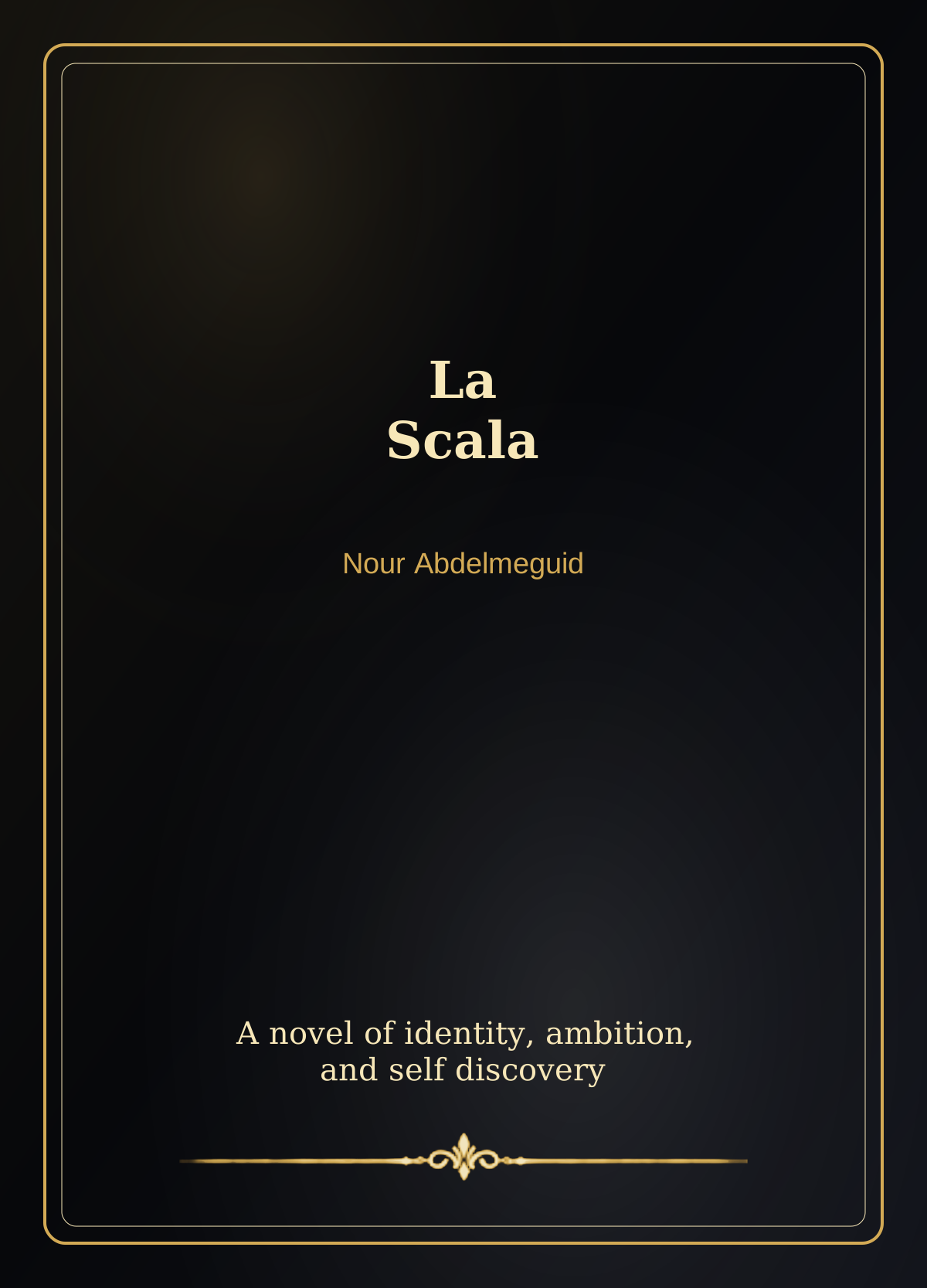
La Scala Novel
La Scala by Nour Abdelmeguid is an Arabic social novel about identity, ambition, and self-discovery. Through the life of Yusra Al-Ghandour and the pain that shapes her, the novel asks how a person can resist paths drawn by others and search for a dream that truly belongs to the self.
Summary of La Scala Novel
La Scala follows Yusra Al-Ghandour, a heroine shaped by early pain, loss, and the weight of expectations. The novel begins from the idea that gratitude and obedience are not enough to build a complete life if the person is forced to live someone else’s dream. Nour Abdelmeguid turns this conflict into a story of self-searching and emotional courage.
The novel explores ambition not as empty success, but as the need to discover the different thing inside oneself. Yusra’s journey is full of pressure, memory, and choices that test her ability to remain loyal to her own voice. The title carries an artistic echo, suggesting a stage, ascent, music, and the hard climb toward becoming.
This novel suits readers who enjoy Arabic social fiction centered on women, identity, and the struggle to choose one’s own future. Its strength lies in its emotional sincerity and in its message that pain can discipline the heart without having the final right to define it.
Characters in La Scala Novel
Yusra Al-Ghandour: The central heroine whose pain, ambition, and self-discovery carry the emotional weight of the novel.
The absent mother: A memory-shaping presence whose loss leaves a deep mark on Yusra’s childhood and identity.
The guiding loved ones: Figures who try to draw a path for Yusra, revealing the tension between gratitude and freedom.
The dream of La Scala: A symbolic force representing art, ambition, ascent, and the life Yusra must choose for herself.
The inner voice: A quiet but persistent presence urging the heroine to recognize what is different and worthy inside her.