

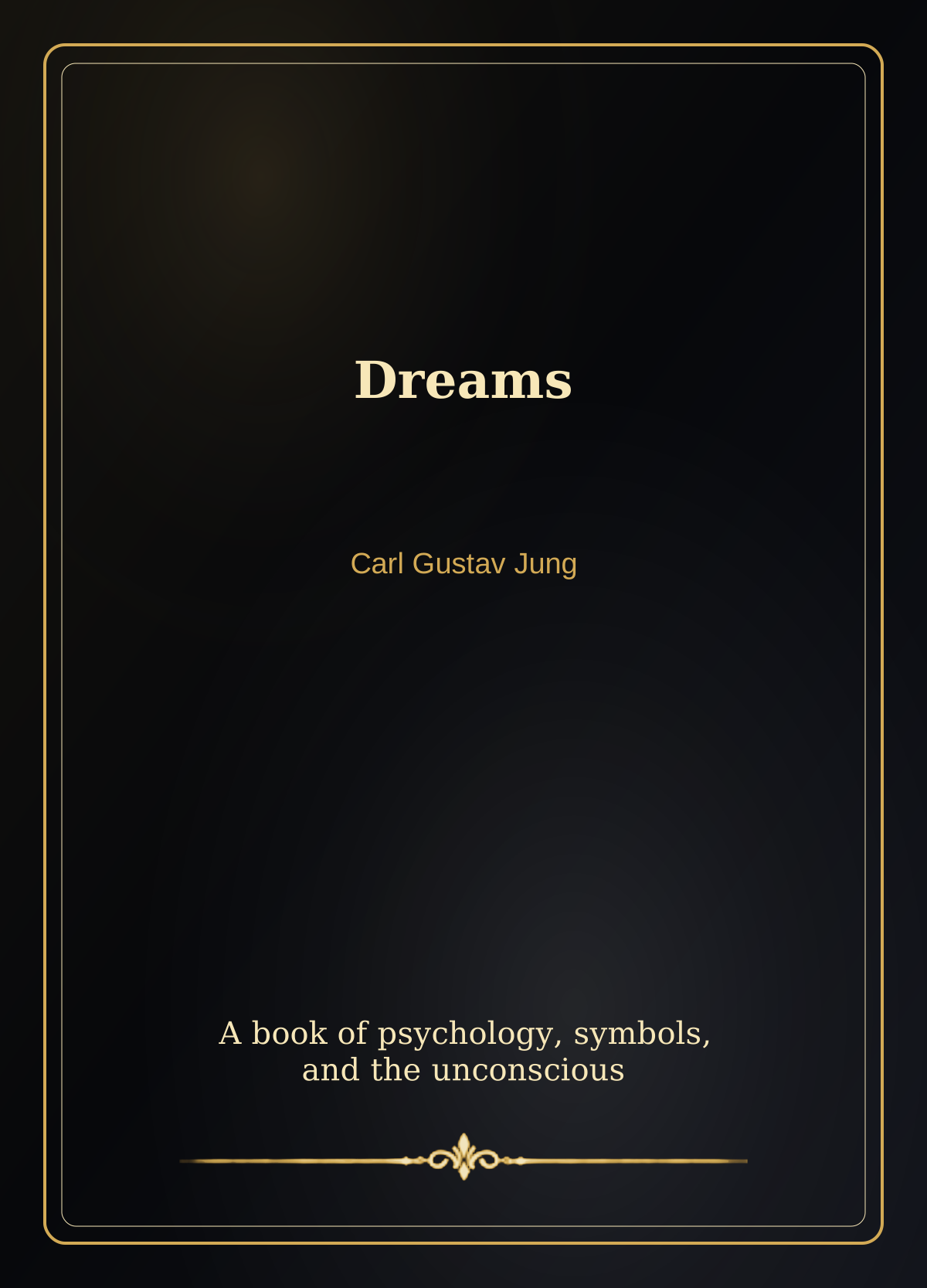
Dreams Book
Dreams by Carl Gustav Jung is a psychology book that explores dreams as symbolic expressions of the unconscious. Rather than treating dreams as random fragments, Jung sees them as meaningful images that can help the conscious mind understand inner conflicts, archetypes, and the process of becoming whole.
Summary of Dreams Book
Dreams introduces one of Jung’s central ideas: the unconscious speaks in images, symbols, and patterns that deserve careful attention. The book helps readers understand why dreams may carry emotional truth even when they appear strange. For Jung, a dream is not merely a puzzle to decode, but a living message from the deeper psyche.
The book discusses how dreams can reveal conflicts, fears, possibilities, and archetypal images shared across human experience. Jung’s approach gives importance to personal context, mythic patterns, and the relationship between conscious life and the hidden inner world. Reading dreams becomes a way of listening to the self.
This book suits readers interested in psychology, symbolism, self-understanding, and the unconscious. Its value lies in showing that dreams can become a serious path of reflection, not because every image has one fixed meaning, but because each dream can open a conversation with the parts of the self that are usually unseen.