

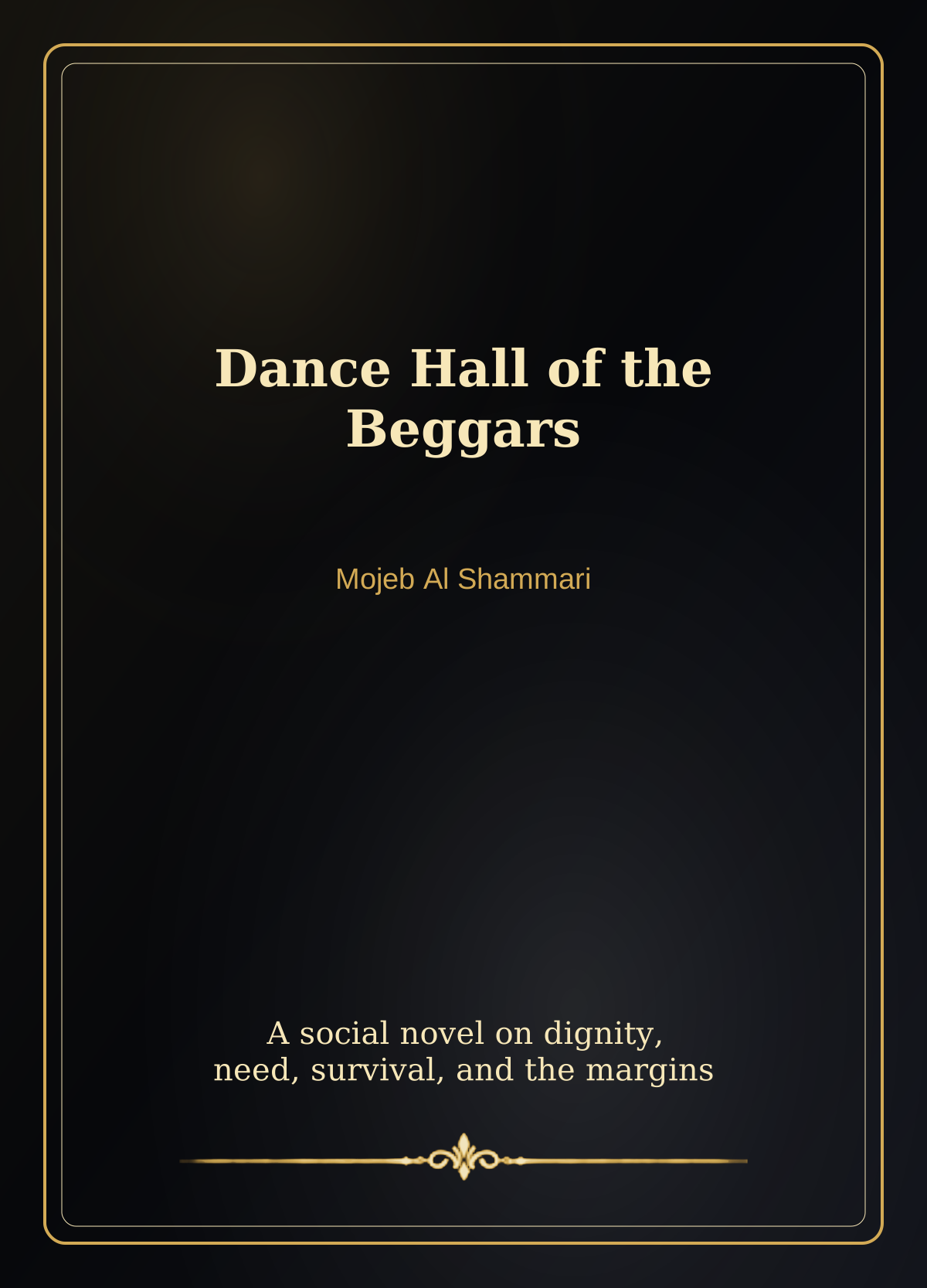
Dance Hall of the Beggars Novel
Dance Hall of the Beggars by Mojeb Al Shammari is an Arabic novel with a provocative title that points toward marginal lives, social contradiction, and the difficult search for dignity. The novel suggests a world where need, performance, survival, and human longing meet in a charged social space.
Summary of Dance Hall of the Beggars Novel
The novel draws its force from the image contained in its title. A dance hall of beggars suggests a place where poverty, performance, and longing are intertwined. Through this symbolic frame, the story can be read as an exploration of people forced to negotiate dignity in a world that often watches suffering as spectacle. The result is a social narrative with emotional and critical weight.
Mojeb Al Shammari’s novel is likely to appeal to readers interested in stories about marginalization, social masks, and the inner lives of those pushed to the edges. Its atmosphere suggests contrast: movement and exhaustion, noise and loneliness, public display and private pain. These oppositions give the work a strong literary mood and invite reflection on how societies see or ignore their most vulnerable people.
Dance Hall of the Beggars is suitable for readers who enjoy Arabic fiction with a social conscience and symbolic depth. It offers a title that stays in memory and a narrative space rich with possible meanings. Its value lies in how it turns hardship into a literary stage where dignity, need, and human resilience are placed at the center of attention.
Characters in Dance Hall of the Beggars Novel
The beggar figure: A representative of people living on the margins while still seeking dignity and recognition.
The observer: A possible witness to the contradictions of society and the distance between comfort and need.
The crowd: A symbolic presence that reflects judgment, indifference, curiosity, and the public face of social life.