

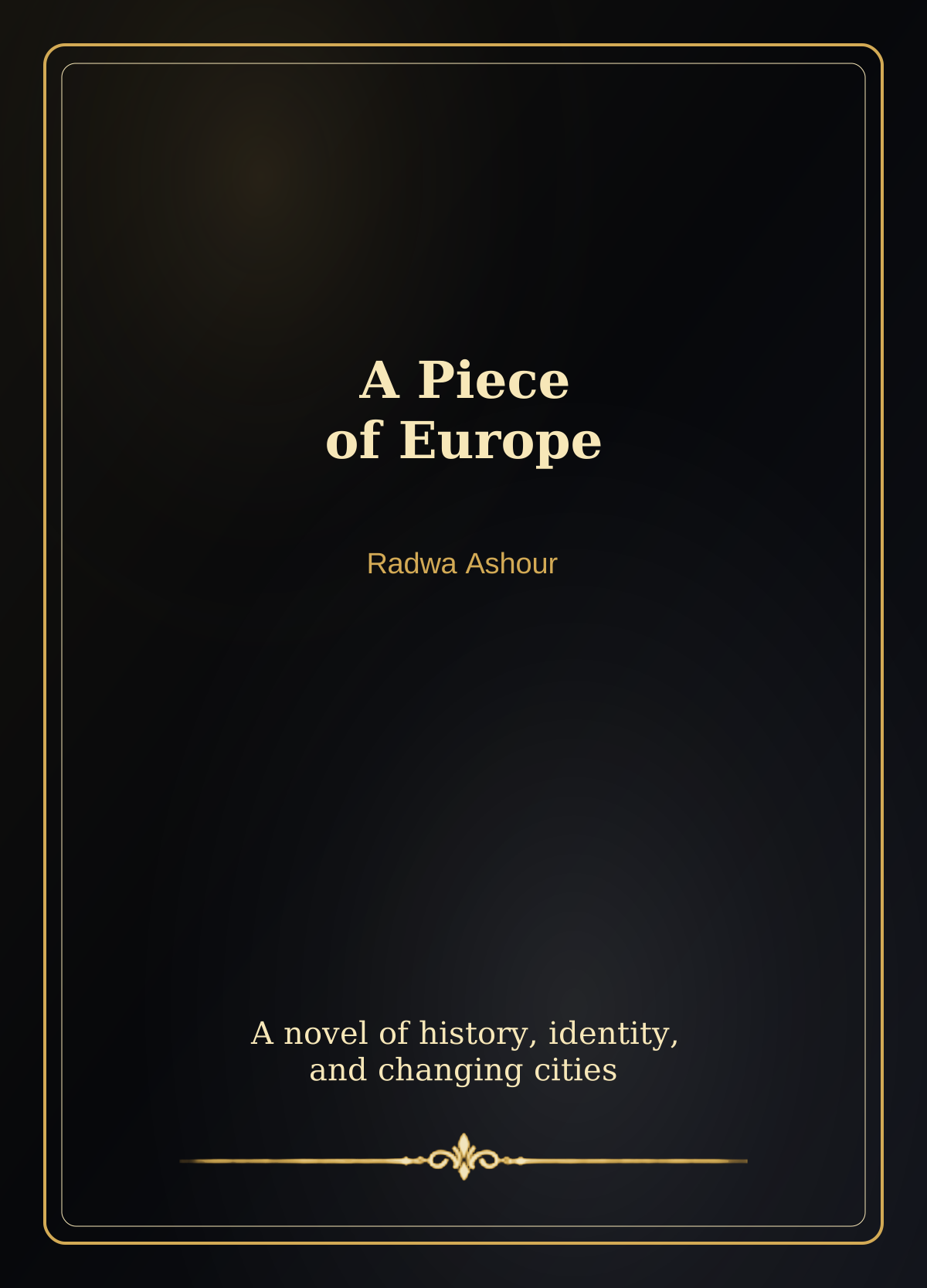
A Piece of Europe Novel
A Piece of Europe by Radwa Ashour is a historical social novel that examines place, memory, colonial influence, and the transformations of modern Cairo. Through layered narration and critical reflection, it turns the idea of “a piece of Europe” into a question about identity, history, class, and the relationship with the other.
Summary of A Piece of Europe Novel
A Piece of Europe moves through history as if walking through a city whose streets hold memory, desire, and contradiction. Radwa Ashour uses the title to question a dream of modernity shaped by imitation, power, and the fascination with Europe. The novel asks what is gained, what is lost, and who pays the price when a society tries to reshape itself through another’s image.
The narrative combines historical awareness with sharp social observation. Cairo becomes more than a setting; it becomes an archive of ambition, colonial influence, class tension, and cultural confusion. The narrator’s gaze moves between events, places, and ideas, creating a thoughtful portrait of a society negotiating its past and its imagined future.
This novel suits readers who enjoy serious Arabic fiction, historical reflection, and literature that connects place with identity. Its strength lies in Radwa Ashour’s ability to make history feel alive and contested, revealing that the question of Europe is also a question of self, memory, and belonging.
Characters in A Piece of Europe Novel
The narrator: A reflective observing voice that connects history, place, and social critique.
Cairo: A living city-character whose streets and transformations carry memory, class, and political meaning.
The modernizers: Figures driven by the dream of progress and by the desire to imitate European models.
The ordinary people: The social body affected by change, inequality, and the pressure of historical transformation.
Europe as an image: A symbolic presence that represents attraction, power, imitation, and the crisis of identity.